

Table of Contents
What Is an Air Release Valve
Why an Air Release Valve Is Important
How an Air Release Valve Works
Main Functions of an Air Release Valve
Common Types of Air Release Valve
Automatic Air Release Valve vs Air Vent Valve
Key Features of a High quality Air Release Valve
Main Advantages of Air Release Valve
Common Applications of Air Release Valve
Air Release Valve in Water Supply Systems
Table of Contents
What Is an Air Release Valve
Why an Air Release Valve Is Important
How an Air Release Valve Works
Main Functions of an Air Release Valve
Common Types of Air Release Valve
Automatic Air Release Valve vs Air Vent Valve
Key Features of a High Quality Air Release Valve
Main Advantages of Air Release Valve
Common Applications of Air Release Valve
Air Release Valve in Water Supply Systems
1. What Is an Air Release Valve
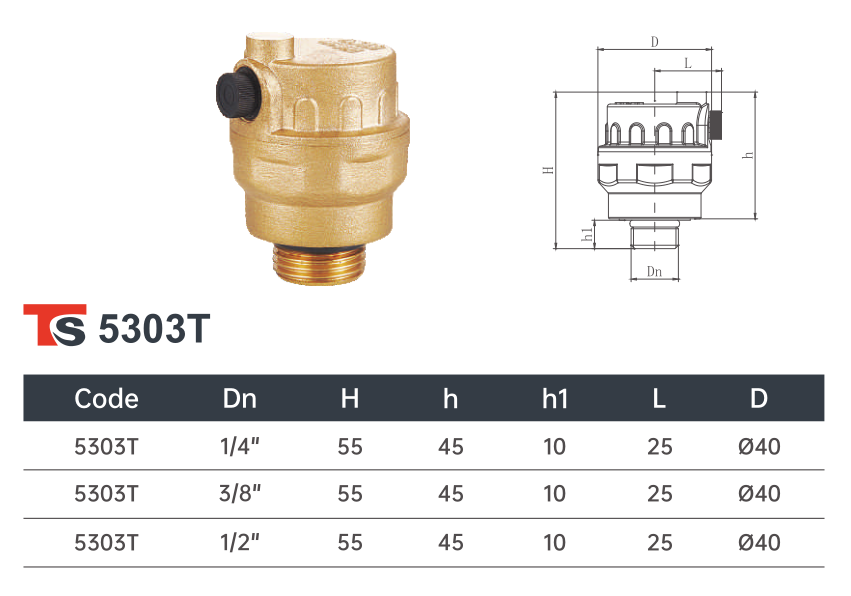
An Air Release Valve is a specialized valve designed to automatically discharge trapped or accumulated air from liquid-filled piping systems. It is commonly installed at high points in pipelines, Manifolds, tanks, heating loops, circulation lines, and process systems where air pockets naturally collect during filling, operation, or maintenance.
The primary purpose of an Air Release Valve is to prevent air from remaining trapped inside the system. Trapped air can reduce flow efficiency, cause noisy operation, create air locks, increase corrosion risk, reduce pump performance, and negatively affect overall system stability.
In many systems, even a small amount of trapped air can cause:
Flow restriction
Uneven circulation
Reduced heat transfer
Pressure fluctuation
Pump cavitation risk
Increased maintenance frequency
Poor system efficiency
For this reason, the Air Release Valve is widely used in:
Water supply systems
HVAC systems
Heating systems
Boilers and hydronic circuits
Irrigation pipelines
Pumping stations
Cooling water systems
Industrial fluid transfer lines
Process piping networks
In simple terms, an Air Release Valve automatically removes unwanted air from liquid systems so the system can operate more efficiently, quietly, and reliably.
2. Why an Air Release Valve Is Important
Air trapped inside a liquid piping system is a common but often underestimated problem. Even in well-designed systems, air can enter or accumulate during:
Initial filling
Pump startup
Pressure changes
Maintenance shutdowns
Fluid temperature changes
Dissolved gas release
Minor leakage or suction side issues
Without a proper Air Release Valve, this trapped air can collect at high points and interfere with normal operation.
Prevents air lock formation
Maintains continuous fluid flow
Improves circulation efficiency
Protects pumps from cavitation and performance loss
Reduces pipe noise and vibration
Improves heat transfer in heating and cooling systems
Helps maintain stable pressure conditions
Reduces corrosion caused by oxygen exposure
Lowers energy loss in circulation systems
Improves system reliability and service life
Because of these benefits, the Air Release Valve is considered a necessary component in many closed-loop and open-loop fluid systems.
3. How an Air Release Valve Works
The operating principle of an Air Release Valve is based on automatic detection and discharge of accumulated air while preventing liquid leakage.
Air enters or accumulates at a high point in the system
The air rises into the valve chamber
Inside the valve, a float or internal mechanism responds to the air level
As air collects, the float drops or the mechanism opens the vent orifice
The trapped air is released to atmosphere or a designated vent path
When liquid reaches the chamber and displaces the air, the float rises
The vent opening closes, preventing liquid from escaping
This automatic cycle can repeat continuously during system operation.
Releases small volumes of accumulated air during operation
Closes tightly when liquid reaches the chamber
Helps maintain hydraulic efficiency
Reduces manual intervention
The Air Release Valve is different from a simple manual vent because it operates automatically and continuously.
4. Main Functions of an Air Release Valve
The Air Release Valve performs several essential roles in a liquid system.
Its primary job is to discharge trapped air that accumulates in pipelines and fluid circuits.
Air pockets can stop or severely reduce fluid movement. The valve helps prevent this issue.
By removing air, the system can maintain a more stable and efficient liquid flow path.
Pumps perform more reliably when air is removed from the system.
Air in pipes can create gurgling, knocking, and irregular flow sounds. The valve helps reduce these issues.
In HVAC and heating systems, trapped air reduces thermal performance. The Air Release Valve improves heat transfer by keeping circuits properly filled with liquid.
Air and oxygen in fluid systems can accelerate internal corrosion. Releasing trapped air can help lower this risk.
5. Common Types of Air Release Valve
There are several types of Air Release Valve designs used across different systems.
This is the most common type. It automatically vents small pockets of air during normal operation.
Heating systems
HVAC loops
Water circulation lines
Pump discharge piping
Uses a float mechanism inside the valve body to open and close the vent orifice based on liquid level.
Reliable automatic operation
Simple internal design
Common in water and HVAC systems
Installed at the highest points of a pipeline where air naturally accumulates.
Long pipelines
Water mains
Irrigation systems
Process transfer lines
Designed to remove small entrained air bubbles in addition to larger trapped air pockets.
high efficiency hydronic systems
Advanced HVAC circulation
Heating systems with air separation needs
Small size design for manifolds, boilers, and equipment assemblies.
Boiler systems
Heating manifolds
Pump groups
Compact mechanical assemblies
Designed for higher pressure, larger pipe systems, or demanding process environments.
Industrial water systems
Pumping stations
Utility networks
Process fluid lines
6. Automatic Air Release Valve vs Air Vent Valve
In many industrial and HVAC contexts, the terms Air Release Valve and Air Vent Valve are closely related and sometimes used interchangeably. However, there can be slight usage differences depending on the application.
| Term | Typical Meaning | Common Use |
|---|---|---|
| Air Release Valve | Automatically removes trapped air from liquid systems | Water, HVAC, heating, industrial pipelines |
| Air Vent Valve | Broader term that may include automatic or manual venting | Heating, plumbing, HVAC, utility systems |
| Automatic Air Vent | Compact automatic vent device, often for boilers or hydronic loops | HVAC, heating, manifolds |
| Manual Vent Valve | Requires manual opening to release air | Radiators, service points, maintenance locations |
For SEO purposes, it is useful to include related terms such as:
Air Release Valve
Automatic Air Vent
Air Vent Valve
Automatic Vent Valve
HVAC Air Vent Valve
7. Key Features of a High Quality Air Release Valve
A high-performance Air Release Valve should provide long-term reliability and stable automatic operation.
Automatic self-operating venting function
Leak-resistant sealing design
Reliable float or internal mechanism
Corrosion resistant body material
Stable performance under pressure variation
Compact structure for easy installation
Compatibility with water and HVAC media
Long service life
Easy maintenance access
Good resistance to scale or contamination
Multiple thread or connection options
Suitable for vertical installation in most systems
These features help ensure that the Air Release Valve performs consistently over time.
8. Main Advantages of Air Release Valve
The Air Release Valve offers many technical and operational benefits.
Air removal allows fluid systems to operate closer to their intended hydraulic performance.
Removing air helps reduce pump issues, circulation imbalance, and component wear.
Air pockets can cause irregular sounds and vibration. The valve helps create smoother operation.
By reducing air accumulation, the system experiences fewer pressure disturbances.
An automatic Air Release Valve minimizes the need for frequent manual venting.
Air-free circulation improves heat transfer and temperature consistency.
Less trapped oxygen can help reduce internal corrosion risks.
9. Common Applications of Air Release Valve
The Air Release Valve is used across many industries and systems.
| Industry or System | Typical Application |
|---|---|
| Water Supply | Pipeline high point venting |
| HVAC | Air removal in chilled and hot water loops |
| Heating Systems | Hydronic loop air elimination |
| Boilers | Automatic venting at high points |
| Irrigation | Pipeline air discharge |
| Pumping Stations | Discharge line air management |
| Cooling Systems | Process cooling water loops |
| Industrial Plants | Utility water and process lines |
| Fire Protection Support | Water circulation and service lines |
| Building Services | Mechanical room fluid systems |
| Laboratory Utility Systems | Controlled fluid venting |
| Agricultural Systems | Irrigation and water transfer networks |
10. Air Release Valve in Water Supply Systems
In water distribution and supply networks, trapped air can collect at high points and interfere with efficient flow.
Main distribution lines
Branch lines
Elevated pipeline sections
Pump discharge headers
Reservoir outlet piping
Transfer stations
Prevents air pocket formation
Maintains consistent flow
Improves pumping efficiency
Reduces hydraulic disturbances
Supports reliable delivery
A properly installed Air Release Valve is an important part of efficient water transport and circulation.
Sed ut perspiciatis unde omnis iste
natus error sit voluptatem
accusantin doloremque
laudantium
info@tsarmatur.se


+46760057388
Copyright © 2023 Ts Armatur, All Rights Reserved
WebbplatskartaDenna webbplats använder cookies för att säkerställa att du får den bästa upplevelsen på vår webbplats.
 English



 Whatsapp
 Telefon