

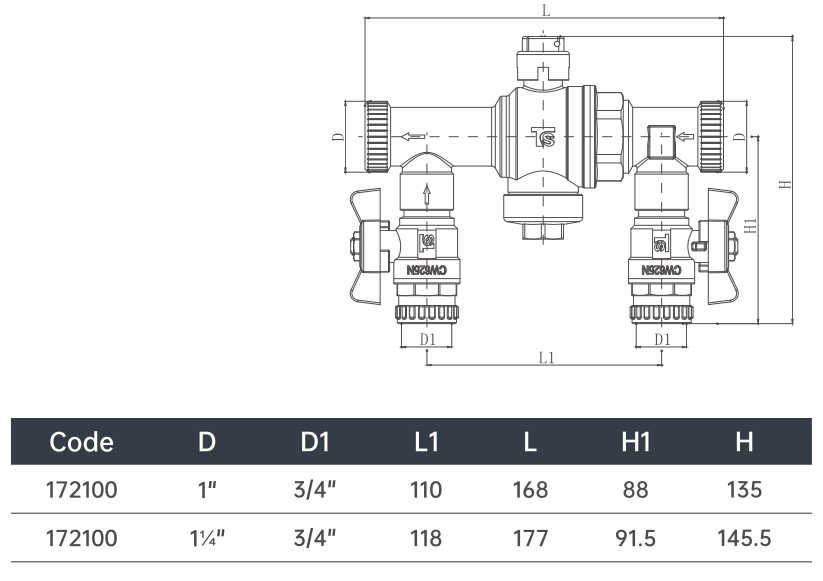
General Definition of 172100 Filter Valves
172100 Filter Valves generally refer to a class of filter-related valve components or filter valve assemblies used in industrial and commercial filtration systems. The term may appear as:
A model reference
A catalog identifier
A maintenance replacement code
A procurement search term
A filter control valve designation
A valve head or valve body number used in filtration equipment
In practical engineering use, a filter valve is a component installed before, within, or after a filtration stage to control the movement of fluid through a filter element, filter housing, media bed, screen, or strainer assembly. Depending on the design, 172100 Filter Valves may be used for:
Line isolation
Service flow control
Backwash switching
Drain routing
Flush cycles
Bypass flow management
Differential pressure response
Multi-position filtration system operation
For industrial reference purposes, 172100 Filter Valves can be defined as:
A filter system valve or valve assembly used to regulate, isolate, redirect, or support fluid flow during filtration, cleaning, maintenance, or equipment protection in industrial and commercial fluid handling systems.
This broad definition is technically useful because the exact physical configuration of 172100 Filter Valves can vary depending on the filtration system architecture.
Why 172100 Filter Valves Are Important in Filtration Systems
Contamination control is one of the most important factors in fluid system reliability. Solids and suspended particles can cause serious operational issues, including:
Pump wear
Seal damage
Reduced flow efficiency
Instrument blockage
Heat exchanger fouling
Nozzle clogging
Pressure instability
Membrane damage
Unplanned shutdowns
Increased maintenance costs
A properly selected 172100 Filter Valve helps ensure that the filtration stage functions correctly and that maintenance can be performed efficiently. In many systems, the filter valve is not simply a shutoff device. It may also be the control point that determines how fluid moves during:
Normal filtration mode
Cleaning mode
Backwash mode
Rinse mode
Bypass mode
Drain mode
Shutdown or isolation mode
Because of this, 172100 Filter Valves often play a central role in system uptime, process stability, and equipment protection.
Core Functions of 172100 Filter Valves
The most basic function of 172100 Filter Valves is to manage the flow of liquid through a filtration system. This may include fully open, fully closed, or partially open operation depending on the valve type.
Filter cartridges, screens, and media beds require periodic maintenance. A filter valve allows technicians to isolate the filtration section without shutting down the entire system.
Many filter systems require periodic cleaning. A filter valve may redirect flow to support:
Reverse flow cleaning
Drain discharge
Sediment flushing
Rinse cycles
Service restoration after cleaning
Some systems require temporary bypass during maintenance or startup. A filter valve may be designed to support controlled bypass routing.
By supporting correct filtration operation, 172100 Filter Valves help protect downstream equipment such as:
Pumps
Heat exchangers
Flow meters
Pressure regulators
Spray nozzles
Solenoid valves
Process instrumentation
Membranes
Filling systems
Cooling circuits
Although a filter valve is not always a pressure-regulating valve, it can help maintain smoother system operation by providing a controlled flow path and reducing operational shocks during switching or maintenance.
How 172100 Filter Valves Work
The working principle of 172100 Filter Valves depends on the design category, but the operating logic is generally straightforward.
Fluid enters the upstream side of the filtration system.
The 172100 Filter Valve directs the fluid toward the filter element, screen, or media bed.
Contaminants are trapped or separated.
Clean fluid exits downstream.
When the filter becomes loaded or requires maintenance, the valve may:
isolate the filter,
redirect flow,
open a drain path,
switch to backwash,
or allow service access.
Depending on design, 172100 Filter Valves may operate in one or more of the following modes:
Open / Closed Mode – Simple line isolation
Service Mode – Normal filtration flow
Backwash Mode – Reverse or alternate flow for cleaning
Rinse Mode – Flush after backwash before returning to service
Drain Mode – Sediment discharge or vessel emptying
Bypass Mode – Temporary alternate flow path
Automatic Mode – Controlled by timer, actuator, or differential pressure
Main Types of 172100 Filter Valves
Because the keyword 172100 Filter Valves can refer to different product configurations, a complete industrial reference should cover the most common functional types.
Manual filter valves are operated by hand and are common in smaller systems or maintenance-intensive applications.
Hand lever or handwheel operation
Simple service and isolation function
Lower system complexity
Lower automation cost
Easy visual position confirmation
Utility water filtration
Small skid systems
Service isolation points
Commercial process lines
Maintenance bypass loops
A multi-port filter valve is often used where the system requires multiple operating positions.
Service
Backwash
Rinse
Drain
Bypass
Closed
Sand media filters
Activated carbon filters
Multimedia filters
Water treatment skids
Filtration vessels with cleaning cycles
Automatic filter valves are used in systems where regular cleaning or switching must happen without manual intervention.
Electric actuation
Pneumatic actuation
Hydraulic pilot control
Timer-based operation
Differential pressure triggering
PLC integration
Reduced labor
Consistent cleaning intervals
Better process continuity
Lower risk of operator error
Improved unattended operation
These are installed before or after a filter housing or strainer to allow service isolation.
Cartridge filter housings
Basket strainers
Duplex strainers
Bag filters
Small industrial water systems
Backwash and flush valves are designed to support debris removal and cleaning without full disassembly.
Sediment discharge
Reverse cleaning flow
Debris purge
Quick maintenance support
Reduced system downtime
Main Advantages of 172100 Filter Valves
A properly configured 172100 Filter Valve supports efficient filtration and cleaner fluid delivery.
Cleaner fluid reduces wear on:
Pumps
Seals
Bearings
Control devices
Heat transfer surfaces
Nozzles
Membranes
When filter valves allow quick isolation and cleaning, maintenance becomes faster and more predictable.
Systems with service, rinse, backwash, and bypass modes can adapt to varying process conditions.
A filter valve simplifies access to the filtration section and can reduce the need for full system shutdown.
Reduced contamination-related failures often lead to:
Lower spare parts usage
Fewer emergency repairs
Better process continuity
Lower labor cost
More stable output quality
Typical Technical Specifications for 172100 Filter Valves
The exact values depend on the actual design, but the table below provides a practical technical reference.
| Parameter | Typical Value / Range | Notes |
|---|---|---|
| Product Reference | 172100 Filter Valves | Common search and identification term |
| Product Category | Filter Valve / Filter Control Valve / Filtration Valve Assembly | General classification |
| Main Function | Isolation / Diversion / Backwash / Rinse / Drain / Bypass | Design dependent |
| Valve Type | Manual / Multi-Port / Automatic / Inline / Flush Valve | Varies by system |
| Flow Media | Water, Process Water, Mild Chemicals, Utility Fluids, Non-Abrasive Liquids | Media compatibility required |
| Nominal Size | 1/2 in to 4 in typical | Larger industrial sizes possible |
| Metric Size | DN15 to DN100 typical | Broader ranges possible |
| Connection Style | NPT, BSP, Flanged, Union, Clamp, Socket | Regional and system dependent |
| Body Material | Brass, Stainless Steel, PVC, CPVC, Cast Iron, Ductile Iron, Engineering Polymer | Application specific |
| Internal Components | Stainless Steel, Brass, Composite, Polymer | Depends on design |
| Seal Material | EPDM, NBR, PTFE, FKM, Silicone | Must match fluid and temperature |
| Operating Pressure | 1–16 bar typical | Higher ratings available in metal designs |
| Pressure Class | PN10 / PN16 / Class 150 equivalent | Reference only |
| Operating Temperature | 0°C to 80°C common for polymer; higher for metal | Final value depends on material |
| Control Method | Manual / Electric / Pneumatic / Hydraulic / Timer / Differential Pressure | Automation dependent |
| Installation Orientation | Horizontal or Vertical as allowed | Follow design instructions |
| Service Modes | Filtration / Backwash / Rinse / Drain / Closed / Bypass | Multi-port systems only |
| Maintenance Features | Isolation, Quick Service, Flush, Drain, Backwash | Design dependent |
| Common Industries | Water Treatment, Process Utilities, HVAC, Agriculture, Chemical Support Systems | Broad use |
| Typical Service Interval | Based on solids load and operating hours | Site-specific |
| Compliance | Industrial valve and piping standards may apply | Exact compliance depends on actual model |
Materials Commonly Used in 172100 Filter Valves
Material selection is one of the most critical decisions when working with 172100 Filter Valves. The correct body, internal component, and seal material can directly affect safety, performance, service life, and maintenance frequency.
Stainless steel is often preferred when higher durability and corrosion resistance are required.
Excellent corrosion resistance in many industrial fluids
Strong mechanical properties
Good performance under higher pressure
Suitable for higher temperatures compared to many polymers
Often preferred in clean utility systems and harsh environments
Process water systems
Clean-in-place support lines
Utility filtration
Chemical support circuits
Food and beverage utility applications
Pharmaceutical utility systems
Industrial wash systems
Brass is common in water service and general commercial utility systems.
Cost-effective
Good machinability
Reliable in many water applications
Suitable for moderate pressure conditions
Commonly used in compact valve designs
Commercial water filtration
Utility service lines
Light industrial fluid systems
Building services
Pre-treatment systems
PVC and CPVC valves are widely used in water treatment and many non-metallic piping systems.
Corrosion resistance in many aqueous applications
Lightweight construction
Easy installation
Lower Cost compared to many metal alternatives
Suitable for many low-to-medium pressure systems
Water filtration skids
Chemical feed support lines
Pool and recreational water systems
Irrigation filtration
Non-metallic utility systems
These materials are common in larger utility or plant systems.
Strong for larger line sizes
Good structural durability
Suitable for plant utility service
Often used in robust industrial water applications
Municipal utility filtration
Larger industrial water lines
Plant cooling systems
Heavy-duty process support systems
Engineering polymers and composite materials are common in integrated valve heads and compact filtration assemblies.
Lightweight
Corrosion resistant
Suitable for compact designs
Lower handling weight
Often used in multi-position filter valve heads
Compact water treatment systems
Media filter control heads
Small industrial filtration units
Commercial filtration packages
Seal and Seat Material Reference for 172100 Filter Valves
Seals are often the first wear point in a filter valve. Choosing the right seal material is essential.
| Seal Material | Typical Temperature Range | General Compatibility | Typical Use |
|---|---|---|---|
| EPDM | Moderate to high | Excellent for water and many aqueous solutions | Water filtration and utility systems |
| NBR (Buna-N) | Moderate | Good for oils and general industrial service | General fluid handling |
| PTFE | Broad | Excellent chemical resistance | Chemical and specialty process service |
| FKM | High | Good for elevated temperature and many aggressive fluids | Process systems |
| Silicone | Moderate | Good flexibility in selected applications | Specialized systems |
Always verify:
Fluid type
Concentration
Operating temperature
Pressure
Cleaning chemicals
Exposure cycles
Frequency of switching
Even a strong valve body can fail early if the wrong seal material is selected.
Typical Size and Connection Options for 172100 Filter Valves
Typical 172100 Filter Valves may fall into the following ranges:
1/2 inch
3/4 inch
1 inch
1-1/4 inch
1-1/2 inch
2 inch
2-1/2 inch
3 inch
4 inch
DN15
DN20
DN25
DN32
DN40
DN50
DN65
DN80
DN100
NPT threaded
BSP threaded
Socket connection
Union connection
Flanged connection
Clamp connection
DIN standard connections
| Nominal Size | Metric Equivalent | Common Connection Types | Typical Application |
|---|---|---|---|
| 1/2 in | DN15 | NPT / BSP / Socket | Small utility lines |
| 3/4 in | DN20 | NPT / BSP / Union | Compact filtration units |
| 1 in | DN25 | Threaded / Union / Clamp | General water systems |
| 1-1/4 in | DN32 | Threaded / Union | Process support lines |
| 1-1/2 in | DN40 | Threaded / Flanged / Union | Medium-duty filtration |
| 2 in | DN50 | Flanged / Threaded / Union | Industrial filtration skids |
| 3 in | DN80 | Flanged | Larger process and utility lines |
| 4 in | DN100 | Flanged | High-flow systems |
Pressure and Temperature Considerations for 172100 Filter Valves
The operating envelope of a filter valve depends heavily on body material, seal material, and internal design.
When selecting 172100 Filter Valves, evaluate:
Normal operating pressure
Pressure spikes
Pump startup surge
Backwash pressure
Shutoff pressure
Water hammer risk
Differential pressure across the filter stage
Low pressure: 1–4 bar
Medium pressure: 5–10 bar
Higher standard industrial range: 10–16 bar
Specialty metal designs: above 16 bar depending on class and construction
Temperature affects:
Seal compression
Body strength
Internal clearances
Wear rate
Chemical compatibility
Cycle life
Polymer-based valves: commonly 0°C to 80°C (varies widely)
Brass valves: often suitable for moderate elevated temperatures
Stainless steel valves: broader high-temperature capability depending on seal system
Specialty metal systems: may exceed 150°C or more if designed accordingly
| Material Type | Typical Pressure Capability | Typical Temperature Capability | Common Notes |
|---|---|---|---|
| PVC | Low to medium | Low to moderate | Common in water systems |
| CPVC | Low to medium | Moderate | Better temperature than PVC |
| Brass | Medium | Moderate to moderately high | Common in utility systems |
| Stainless Steel | Medium to high | Broad | Strong all-around industrial choice |
| Cast / Ductile Iron | Medium to high | Moderate to high | Common in larger systems |
| Composite / Polymer | Low to medium | Low to moderate | Often used in integrated valve heads |
Sed ut perspiciatis unde omnis iste
natus error sit voluptatem
accusantin doloremque
laudantium
info@tsarmatur.se


+46760057388
Copyright © 2023 Ts Armatur, All Rights Reserved
WebbplatskartaDenna webbplats använder cookies för att säkerställa att du får den bästa upplevelsen på vår webbplats.
 English



 Whatsapp
 Telefon